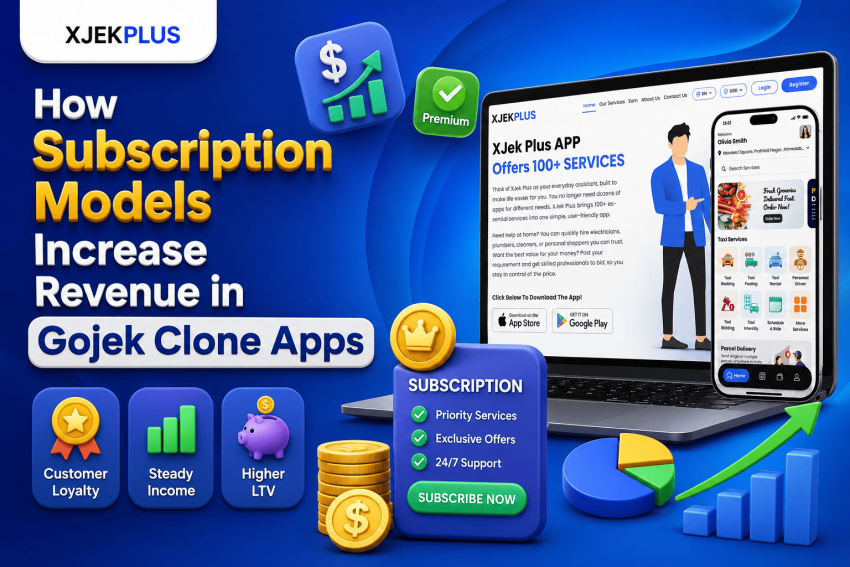
To those who don’t know, a standard Gojek Clone offers more than 101 on-demand services in its script. A super app of this potential is known for scaling the market easily through commissions on almost every booking it offers.
Apart from commissions, it also charges a subscription fee to its users and service providers. Most founders don’t know about the second one. They often think about adding subscription fees to premium services without knowing how to layer these subscriptions intelligently.
So, before you spend your critical time on making membership tier models for your business, it is very important to understand the nature of commission and subscription revenue and what it does to your business from a customer point of view.
Because a right membership tier gives your business a new look, especially in a city where it has been planned before at this enormous scale.
Why Your Gojek Clone Script Demands Subscription Architecture Before You Think It Does
Just like commissions, subscriptions are a main source of income for the app, sitting right alongside in-app ads and paid listings. But a lot of people who buy the Gojek clone script spend their first few months only worrying about their commission rates, leaving the subscription side completely untouched.
To understand why this is a missed opportunity, you have to look at the services themselves.
The app covers four main areas: taxi booking, parcel delivery, store deliveries, and on-demand services, plus extras like video consultations, real estate, and even pet care. Having all these different options is exactly what makes a membership plan so attractive to a customer.
If someone is already taking rides and ordering groceries a few times a week, a subscription that rewards them for doing both will keep them coming back much better than basic, one-off discounts.
However, there is a catch.
While having so many services is great, launching a single subscription plan that includes all of them at once can easily confuse your new users instead of attracting them. When you are just starting out, keeping things simple goes a long way. It is much better to start with just a couple of membership tiers for your most popular services – like taxi bookings and store deliveries.
Later on, once you see what service combinations your customers are actually using, you can expand those plans. Building trust with your early customers is far more important than trying to offer everything right out of the gate.
Fortunately, the app’s central admin panel makes this easy, allowing you to tweak your service categories and subscription plans later on without needing any complex technical updates.
Designing Subscription Plans That Actually Convert
When it comes to figuring out subscription plans for a Gojek clone app, many business founders think it is just about picking random prices. In reality, it is really about understanding how your customers naturally use the app and its services.
Before setting any prices for your newly launched business, you just need to look at three simple things, i.e. who is using the app frequently (mostly more than six times a month), what services they usually mix together, and how much they typically spend when they do.
Look at your regular customers first
See, how often someone uses the app tells you a lot more about them than how much they spend. For instance, a customer who orders small meals four times a week is much more likely to buy a subscription than someone who books just one expensive airport ride a month.
When people use your app regularly, paying a monthly fee just makes sense to them naturally. So, it helps to identify your most frequent users first before you start looking at their spending habits or patterns.
Creating the right membership levels
A good starting point is offering three simple plans. A basic plan could reward people who use just one or two services. A middle plan might be for those who mix things up, like booking rides and ordering from local stores. Finally, a premium plan could be for people who rely on your app almost every day for multiple services.
But the trick here is to offer real, clear benefits like a specific discount on delivery, getting a driver way faster during rush hour, or free cancellations. Vague promises like “exclusive member offers” rarely work because businesses usually struggle to actually deliver on them over time, leading customers to abandon the service effectively.
Pricing it right for the customer
A common mistake many startup founders make is pricing their subscriptions based on what it costs the company, rather than how much money it saves the customer. If your middle plan saves a user the cost of four delivery fees a month, try pricing the membership a little lower than that total saving.
Customers want to clearly see they are getting a good deal before they commit to a monthly charge. You need to make these savings obvious so they don’t have to do the math themselves.
Charging service providers, too
This is something a lot of business founders miss completely when launching a ready-made app. You can actually create a separate, steady income stream by charging service providers a fee to list and sell on your platform.
This means you can run two types of memberships at the same time: one that offers discounts to your regular customers, and another that gives drivers, cleaners, and store owners better visibility to reach those customers.
In a way, the monthly fees paid by your providers help cover the discounts you are giving to your users, which keeps the whole business balanced and gives it the formula to succeed.
Showing users what they save
Once someone buys a subscription, one of the best ways to keep them around is to simply show them a running total of how much money they have saved since they joined. Turning a standard membership into a visible, ongoing reward reminds them why it’s worth renewing every month.
Fortunately, buying a ready-made super app helps because the admin controls make it pretty straightforward to display this kind of personal data without having to rebuild how the app works from scratch.
Looking at the Subscription Section as a Core Business Setup
A business founder needs to take a step back and think for a moment. Up to this point, they usually think about the subscription plans as just another feature in the app offered to the customers.
They are not wrong, but it’s only half the story. See, having a good membership plan in place is actually a very important tool when it comes to managing the finances of your business.
Getting a steady and predictable flow of income every month (even if it’s from a small user base) changes the whole game effectively.
It makes figuring out the everyday operational costs way easier, giving founders the confidence to hire new team members way before they actually need them. Also, it makes the super app look much more reliable when you are sitting down with potential investors.
In reality, investors naturally prefer a business setup that brings in guaranteed money every month i.e. not just relying on the unpredictable ups and downs of daily bookings or orders.
The real secret here demands great attention to balance.
You have to keep the app interface completely simple and friendly for the customers booking the services, while setting up a smart financial structure quietly behind the scenes.
The app design stays clean and straightforward, even if the backend is doing a lot of heavy lifting to process all those details.
Final thoughts
At the end of the day, having a subscription plan section in a Gojek clone app isn’t just some nice-to-have bonus feature.
It is actually a core part of how a multi-service business makes money, right alongside taking the regular commissions.
And thankfully, buying a ready-made app gives you an admin panel with the exact tools needed to manage it all without much friction.
If founders don’t take the subscription model seriously, they might end up relying heavily on constant discounts just to attract new users. This will eat away the profits way too quickly every time the app enters a new city. But taking the time to set up these membership levels early on (even if they aren’t totally perfect from the start) gives the startup a solid structure. This reliable foundation decides if the business scales higher and gets stronger as more customers buy the subscription.