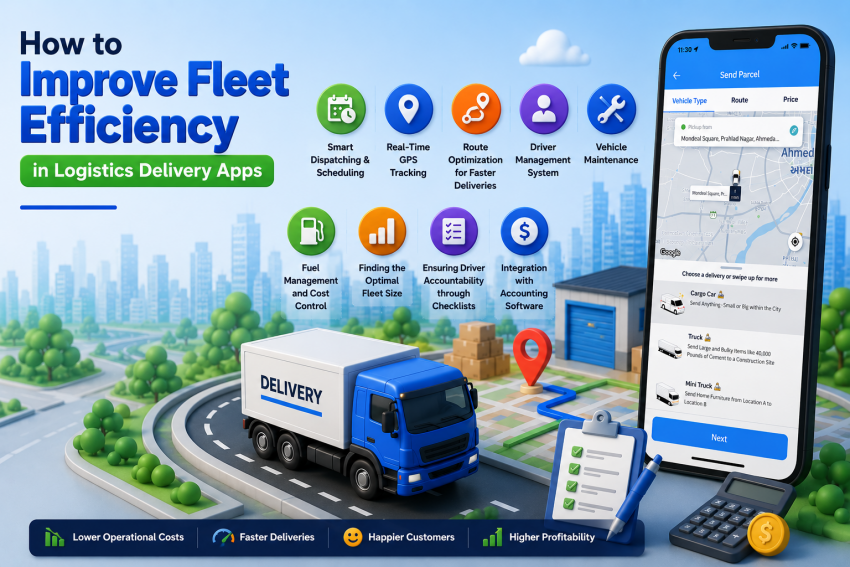
Being an owner of a logistics delivery application or on-demand taxi service requires running a high-speed group. Drivers are in constant motion, customers look at their gadgets every ten seconds, and you have a fleet of vehicles that frankly speaking does not want to play along all the time. If you are creating apps like Uber or a delivery app within the city limits, your fleet is the very pulse of your business. When the pulse stops beating properly, there will be problems for your enterprise.
The great news is that being a technical genius is not required for managing your fleet. By implementing several techniques and using some special software, you can economize, motivate drivers, and provide timely services to your customers. The reality is that any company that uses today’s logistics delivery app saves enough resources to cover the investment within the first year!
Let’s break down how to keep your business rolling smoothly without the usual headaches.
What is Fleet Management?
Fleet management is the concept of controlling your business’s vehicles – from acquiring them to maintaining and monitoring them. In other words, it is all about having your fleet where you need it, when you need it, and doing what needs to be done.
Modern technologies have revolutionized fleet management. Thanks to mobile applications and automation tools, companies can save money on their operations, improve efficiency, and increase revenues significantly. In particular, statistics show the following impressive figures:
- The global market for fleet management is forecasted to achieve USD 52.50 billion by 2030, registering a CAGR of 10.6%.
- 74% of enterprises noticed significant improvements after implementing fleet management technologies.
- Over 86% observed ROI within a year, and almost 44% got it within six months.
- Over 56% received an immediate improvement in customer services.
It’s evident that modern fleet management is more than just nice to have.
Key Challenges in Fleet Management of Logistics Delivery App
It’s important to understand where things typically go wrong. What challenges your Logistic Delivery App will face.
- First of all, inefficiency in logistics operations is one of the problems many companies face due to the absence of real-time tracking. When it is impossible to know whether the vehicle is on duty or not, making decisions turns out to be guesswork.
- Furthermore, driver productivity is often an issue. The acceptance of deliveries by drivers without knowing how far away the client is can result in under-deliveries and unnecessary expenses.
- Safety is the other problem since today customers are looking for companies that provide deliveries in clean and safe conditions.
- And finally, hidden costs related to fuel waste, ineffective routing, and improper care for equipment may ruin financial performance.
Best Practices for Effective Fleet Management Logistics Delivery App
In order to make challenges work to their advantage, companies need to apply a strategic approach. Below are listed the best ways to manage the fleet that will help to enhance the logistics delivery app.
- Smart Dispatching & Scheduling
Dispatching plays a key role in all logistics processes. Doing dispatches manually often results in mismanagement, mistakes, and even wasted time. Smart dispatching means automation, which enables a company to assign orders to the drivers in accordance with their current location and availability. As a result, idle times can be eliminated and order fulfilment becomes faster. Thanks to advanced fleet panels available in modern apps, the process of dispatching is controlled easily.
- Real-Time GPS Tracking
You cannot control the process if you don’t have enough data about it. With GPS tracking in real time, all logistics and delivery activities are under control. Not only do customers receive accurate information concerning their delivery but companies can track drivers and vehicles, reroute them, etc. It provides enhanced transparency for the customer, while for the company it means enhanced control.
- Route Optimization for Faster Deliveries
Time is very important in logistics. Longer routes not only affect the speed at which deliveries are made but also increase costs. Optimizing the route helps you save both time and money as you take the shortest distance when delivering cargo. Optimized routes improve efficiency in operations and increase productivity.
- Driver Management System
The drivers are the most critical aspect of any fleet company. Proper management will help ensure the operations of the fleet run smoothly. A comprehensive driver management system will assist in ensuring proper document verification, performance measurement, and behaviour management. It also ensures that there are no compliance issues.
- Vehicle Maintenance
Neglecting vehicle maintenance will only result in breakdowns and delayed deliveries. Regular servicing of your vehicles by using a well-designed fleet management system will keep all the cars working efficiently. It will also extend their life.
- Fuel Management and Cost Control
Your costs in relation to fuel can be rather high. Without controlling them, these costs will easily get out of hand. You must monitor fuel use in each vehicle in order to notice possible problems or improper usage. Small improvement in fuel efficiency can save you big money.
- Finding the Optimal Fleet Size
Finding a balance is important when it comes to your fleet size. You should find a way to keep your fleet size optimal. Having too few vehicles could leave you with an opportunity cost, while having too many means that your costs will rise considerably. Analyze trends and have enough backup.
- Ensuring Driver Accountability through Checklists
Sometimes, simple tricks do the most. By requiring your drivers to complete checklists before and after their trips, you’ll be able to notice any problem with the vehicle and encourage accountability among your drivers.
- Integration with Accounting Software
While fleet management deals mainly with managing vehicles, it’s impossible to overlook costs. Using integrated accounting software will allow you to control all your expenses as well as handle payrolls and automated invoicing.
Conclusion
The development of a logistics delivery app is an interesting adventure, but making sure that your fleet is in order is what will help you win the race. The better you treat your cars and your drivers, the better business you’ll have.
Don’t wait until disaster strikes to start managing better!
See for yourself just how easy and profitable using a professional fleet system can be. Check out the latest technologies for yourself and start advancing your business.