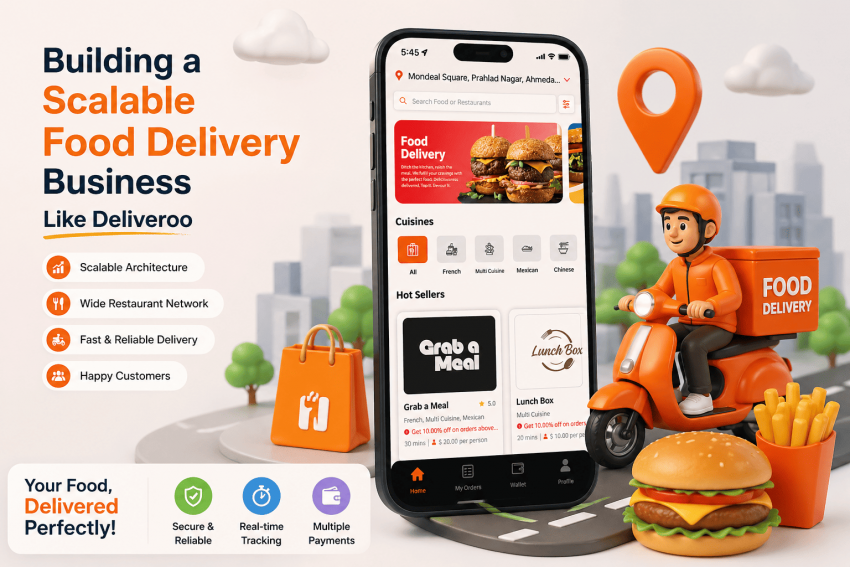
The hard work is done. The logistics are sorted out, the customer base is growing, and you’ve entered the domain of a food delivery service provider. Your clients rely on your system to deliver their most loved food on time and directly to their doorstep, steaming hot and without delays. You’ve cracked the code of a seamless UI that encourages people to come again and again.
This leads us to the big question: What’s next? Why limit yourself to just food deliveries?
These days, “one-stop shop” doesn’t remain a privilege; it becomes a necessity. Customers are too busy, and convenience is all they seek. They hate having to download five separate applications to fulfil five different requirements. They prefer having just one system that delivers everything from start to end.
If growth is on your mind, then it’s high time you transcended the traditional single-vertical concept and moved ahead as a Deliveroo Clone Developer. Instead of just increasing the services you provide, you’d be working on creating a complete ecosystem. If you go ahead to create a Multi-Store Delivery App, then you are not just putting all your eggs in one basket; you are making that basket bigger.
Let’s look at how you can take your existing success and turn it into a Multi-Store Delivery platform that serves every corner of your customers’ day.
The Four Pillars of Your New Multi-Store Delivery App
Here are the four services you need to add to your catalogue to keep your customers glued to your app.
1. Food Delivery
It’s what you’ve got now, the restaurants, the drivers, and the loyalty of your users. Don’t forget about that because it’s what made your app successful. With any expansion, keep improving this service because this is how your clients found out about you.
2. Groceries Delivery
Food is the desire, but groceries are a need. Once you add this feature to your app, you’ll go from a treat for a Friday night to a necessary part of people’s everyday life. Think about all those working individuals who are simply too busy to do their shopping. Making it possible to order everything from milk to fruit would increase your order numbers dramatically.
3. Pharmacy Delivery
There is nothing more urgent than needing medication. When a user is sick or caring for an elderly relative, the last thing they want to do is leave the house. By integrating a pharmacy delivery feature, you offer a lifeline. This builds incredible brand loyalty, the kind of loyalty money just can’t buy. It positions your app as a caring, reliable pillar of the community.
4. Parcels Delivery
Do you ever notice your drivers standing still when there’s no rush for food orders? That’s the money you can earn by offering parcel delivery. Local businesses will need to send papers, friends will be able to exchange small gifts, whatever comes up, your delivery service will handle it.
Increase Your Profit: How to Monetize Your Deliveroo Clone
Building the app is just the beginning. The real magic happens when you leverage your Multi-Store Delivery App to create multiple, sustainable revenue streams. Here is how you can stack the chips in your favor:
1. Commission on Every Order Completed
This is the classic model for a reason; it works. Every time a delivery is finalized, your platform takes a small slice of the pie. It’s a low-barrier-to-entry model that scales automatically with your volume. As your order count climbs, so does your bottom line.
2. Subscription Plans
Why wait for individual transactions? Offer subscription plans to your drivers or power users. For drivers, a “Gold Membership” could offer priority in the delivery queue or lower platform fees. For users, a monthly fee could waive delivery charges. This creates predictable, recurring monthly revenue for your business.
3. Promo Codes and Discounts
It would probably go against your initial instinct to give out discounts in an effort to earn money, but it is a way to invest in marketing. Promo codes get users extremely engaged. The user who may have placed their orders once weekly will definitely place double orders if they have a promo code. The increase in orders earns you extra commissions, thus covering the discounts given.
4. Commission from Restaurants and Stores
Your platform is providing a massive service to local businesses: access to a customer base they wouldn’t have otherwise. Charging stores a commission on every order is a fair trade. Since it’s performance-based, they only pay you when they sell something, it’s a win-win for everyone involved.
5. Surge Pricing
In the delivery world, demand isn’t always flat. When it rains or during peak dinner hours, demand spikes. Surge pricing allows you to capitalize on this. By charging a slightly higher fee during peak times, you not only increase your revenue, but you also incentivize your delivery riders to stay active when you need them the most. It’s basic supply and demand, and it’s a game-changer for profitability.
6. In-App Advertising
Your home screen is prime digital real estate. Local businesses, grocery chains, and even pharmacies will pay to be featured at the top of your app. You can charge based on impressions or clicks. It’s passive income that doesn’t disrupt the user experience; in fact, if done right, it helps users find exactly what they are looking for.
The Masterstroke: Why Go With a White-Label Option?
Should you think about making the jump from the drawing board to a developer team, I would highly recommend reconsidering your position. It will take months to create a fully-featured and efficient app, and it will cost you an arm and a leg. Moreover, there will likely be a considerable number of bugs that you will need to fix during the process.
“The Masterstroke” here is purchasing a White-Label Solution.
To clarify, when deciding to open a restaurant, would you want to build its kitchen yourself, complete with stoves and fridges? Or you will go with the proven concept of a turnkey facility, ready to use? Here is where the Deliveroo clone software comes in handy. It is an already developed code that was tested under real-world conditions and faced all the challenges related to its operation. All you need to do is customize it according to your needs.
Frequently Asked Questions
What other functionalities can I add to my Deliveroo Clone App?
There are countless options available. You can add features such as “Multi Cart” functionality, which lets one person order food from two different restaurants at once; a loyalty points system; push notifications for lightning sales; and social media integration, among others. The aim should be to increase customer retention by offering valuable services.
Which platform is ideal for the development of my app?
Don’t only focus on cost-effective options. Rather, think about scalability. For instance, inquire whether the chosen app platform can handle 10,000 orders in a single day. You also need to know how responsive they are after the app has been launched into the market. How often do they release new software?
Conclusion
The future of the delivery business isn’t about being the “best burger delivery app.” It’s about being the most convenient life assistant for your customers. By transitioning your existing business into a Deliveroo Clone, you are setting yourself up to capture every part of the local economy from dinner to medicine to groceries. The time has never been more opportune than now, with the technology required already available to you. What reason could there possibly be to wait for anyone else to compete with you? Embrace the change, expand your horizons, and build your own multi-store empire.