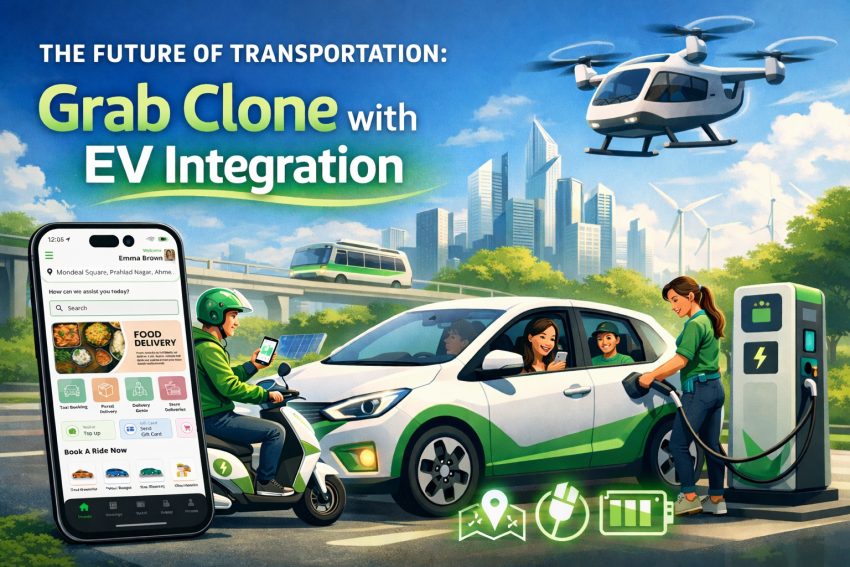
A Grab clone in Canada could provide more than just rides. It could help shape cleaner transportation, facilitate electric cars, as well as link last-mile deliveries on a single platform. To U.S. founders looking at Canada it is worth paying consideration since the market is shifting toward mobility that is quicker more efficient, cleaner and simpler to expand.
The opportunities are not only in transportation. It’s in infrastructure. Cities require better systems for EV-powered transportation, logistics, as well as local mobility. Mobility apps that grow to meet the needs of cities can be more than a software. It can be an integral part of the city’s daily routine.
The Step towards a Greener Future
A Grab clone in Canada makes sense as we are already moving towards cleaner mobility. In the wake of Paris Agreement pushed governments and companies to consider seriously the issue of emission levels, and this thought process has now extended to transportation. People are looking for solutions that will reduce pollution, reduce fuel consumption and can be adapted to modern city lifestyles.
This shift is not just about policy. It’s also about how people behave. Riders are looking for convenience. Businesses need efficiency. Cities need less traffic and better air quality. If these requirements meet, mobility platforms are more crucial and not less.
For founders, it is only one thing. The market isn’t demanding an increase in the amount of same. It’s looking for transportation that is sensible and responsible at the same at the same time. This is the place where a properly-designed platform can begin to be important.
The Green Revolution in Canada: Electric Vehicles
Canada is witnessing real growth with electric cars. Charging networks are increasing as more and more fleets test electric vehicles, and more companies are considering more sustainable delivery methods. This means that there is a need for applications that assist with electric transportation instead of treating it as an additional feature.
A Grab clone in Canada could fit right into that growing market. It supports the EV ride-hailing industry and the coordination of fleets and parcel deliveries along with local logistics. It gives the platform more applications which is beneficial since only one type of service is enough to create a solid business.
The main point is straightforward. As EV usage increases the software that supports it also becomes useful. Drivers require routing. Operators require control. Customers want a an easy way to book. Mobility apps that support the three options can easily become an integral part of the system that users rely on day-to-day.
In terms of U.S. audiences, this is also a good idea from a business perspective. Canada is near enough to be understood and big enough to be significant. It awards companies who address real problems with movement without complicating the experience.
The Gap Which No One Talks About
Green shifts are real however, the support system isn’t even. The majority of EV development begins in metro cities. Outside these regions, the infrastructure typically isn’t up to par. This means that the demand is there but the infrastructure layer remains thin.
Logistics is another area of weakness. Local transport relies on older systems that aren’t scaled well and difficult to manage. Last-mile connectivity is usually managed by small vehicles or cycles, or even scattered delivery partners. This is only true up to an extent.
This is when the chance is more apparent. If the physical infrastructure is not working The software layer is able to aid in coordinating the existing infrastructure. It is not able to construct charging stations or roads however it can help make moving simpler to manage. This is usually enough to make it possible to start a market.
This is when an intelligent model begins to appear natural. Making every component from scratch sounds like a good idea until deadlines are set and then reality starts charging rent. A well-planned path that has an established base could make the initial stage lighter and more beneficial.
How a Grab Clone in Canada Can Introduce EV Infrastructure
The Grab clone in Canada can assist in connecting the various parts of electric mobility. It will allow transportation, last-mile delivery as well as logistics all together. This means that the same platform can be used by riders, businesses, and drivers without having to separate each one into separate systems.
The greatest value lies in the last mile connectivity. The short distances and local deliveries are the best locations to integrate EVs into use on a daily basis. A platform can make these trips more efficiently and assign drivers to nearby locations more efficiently and make electric vehicles more appropriate for urban services.
This also helps create a more efficient operating model. If the app manages EV transport and delivery tasks in tandem, businesses can enjoy greater flexibility. One fleet can handle multiple demand streams that can boost revenues and resource usage.
This is where the market logic gets very quiet, but it is also a strong. In the event that an app has the ability to manage flow of service payment, driver tracking and administration control so EV support will not seem like a compulsion feature. It’s more as the next layer.
Why a White-Label Grab Clone Feels Easier to Trust
The white-label Grab clone is often more straightforward for businesses to work with as it helps them establish a framework before they begin to build the brand. This is because the majority of founders don’t need an empty page. They need a solid beginning point from which they can grow from.
Imagine it as the idea of a Lego set. If you get an unfinished model You may be enthralled by it, but have a sense of belonging to the model. If you purchase an instructional set that includes the correct pieces it is more personal. You are more aware of it and are more concerned about the outcome.
Similar principles apply to mobility. White-label platforms provide the structure but does not provide the final branding. You are still in control of the brand as well as features and direction. It’s just not worth your time trying to figure out the first 100 parts on your own.
This is the reason why many companies choose to go with a white label. It helps reduce setup friction. It speeds up the launch process. It provides teams with a functioning process to improve on and not rely on a promise that has been broken that they must assemble from scratch.
For entrepreneurs, this could make the distinction between attempting to test the market or not. The market doesn’t need a perfect structure. It is responsive to those who show up with something that is useful as well as stable and ready for operation.
Development Process of a Grab Clone
The process for developing the development of a Grab clone does not need to be a slow process. White-label models generally follow an easy process that helps keep the company focussed on growth and not technical issues.
1. Buy the script
The basic product is bought by a reputable development company. This provides the company with an established platform that includes essential ride-hailing functions and administrative functions.
2. White-label customized
It is developed around the brand and market created by an identical development firm. It could include EV features logistic tools and local payment services, and other design changes that meet the audience you want to reach.
3. Start in 1 to 2 weeks
With a reliable script and a well-defined strategy, the platform will launch quickly. This is important because a speedy launch gives the company an opportunity to evaluate the market before launching larger.
This method is most effective when the app is developed for real customers not just for boardroom slides. The right development will make the application simpler to manage, easier to develop, and also easy to explain to clients. That’s how a mobility business can gain confidence.
It also prevents the company from getting caught in a cycle of over-building. There are companies that spend years trying to create the perfect app and then end up with a delay in launches and a sluggish team. A white-label approach doesn’t fix everything however, it will eliminate many of the noise.
Conclusion
Canada is making strides towards more sustainable transportation, but the system is not yet uniform. This gap opens up the possibility of the creation of a Grab clone in Canada that could support electric vehicles as well as logistics and last-mile delivery on one platform. The business case is more convincing in the event that an app has been designed to evolve to market changes.
The truth is that some founders would prefer a customized design because it sounds more serious. Some prefer a model that is well-structured enough to be able to start, learn and grow. In the field of mobility the second choice tends to be more practical since the market favors clarity, speed and flexibility.
A white-label Grab clone can give the beginning point, without making your business feel like it’s locked in. It allows you to enter the market with a genuine product, and then develop the product into more specific in the course of time. Visit a white-label trusted company’s Grab clone demo and see how the platform will support delivery, EV mobility and expansion from the beginning.
FREQUENTLY ASKED QUESTIONS
1. What exactly is a Grab clone in Canada?
It is an app that provides delivery and ride-hailing services. It is a developed specifically for the Canadian market and has features like Grab.
2. What makes Canada an ideal location for EV mobility?
Canada is growing EV use, with a particular focus on major cities, and the need for greener transportation is increasing.
3. Can one app handle the transportation and logistics?
Yes. A properly-built platform will assist with ride booking as well as dispatch, tracking of deliveries, and the management of fleets.
4. What are the reasons why businesses opt for to go with a white-label Grab clone?
They choose it due to the fact that it provides an already-built base, a faster launch time, and allows them for them to tailor the product to their own brand.
5. Does a white-label product work superior to building from scratch?
For a lot of founders, yes. It cuts down on time, decreases initial complexity and makes the initial launch more feasible.