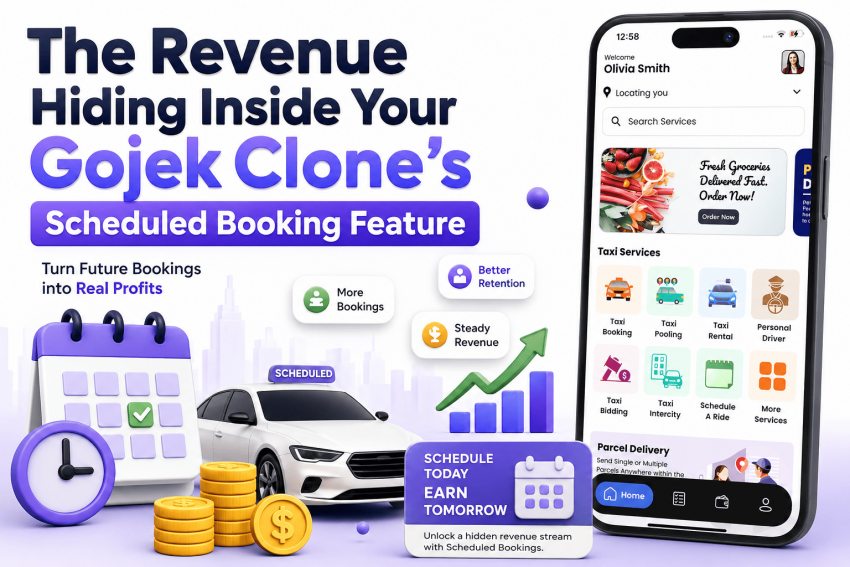
If you are thinking about making a multi-service app or wanting to make sure what kind of white label Gojek clone does exactly how you want it to function, maybe the scheduled booking feature may not be that much of importance as an add-on.
Many white label platforms or Gojek clone script providers have 101+ services in their super app solutions. With quick white-labeling and multi-currency support, anyone can easily position themselves as a strong competitor in any market globally.
If you look inside these 101+ services or feature sets, appointment scheduling doesn’t get talked about much, which is a huge mistake, as they do so much more, which goes well beyond simple customer convenience.
In other words, because this feature allows the customer to pick a time slot in the future, a booking made thus creates advanced data for the owner of the business.
And if that data is used in the best way possible, it can reshape how a business makes the most out of its service providers, decide what is best for their company, and predict what will happen to fulfill upcoming demands at scale.
How does Scheduled Bookings work in a Gojek Clone App?
The first thing you need to know is that an app like a Gojek clone works with lots of different service categories all at the same time. If you have a single platform, it can handle rides, home cleaning, beauty services, plumbing, food delivery, and video consultations all together.
Because every single one of these categories has different patterns for demand, different times when providers are available, and different amounts of time needed beforehand, the scheduled booking feature acts as a link to connect what a customer plans to do in the future with how a provider gets ready today.
So, when a customer uses an app like Gojek and books a home cleaning for later in the week, like a Thursday afternoon, that one action creates a guaranteed piece of data for the future.
4 Ways Scheduled Booking Data Brings More Profits (If Used Correctly)
1. Making Visible Demand Before It Arrives
Instead of relying only on what happened earlier, a multi-service app business can see future demand taking shape in real time. In fact, 77% of service businesses now use some form of online scheduling, meaning advance booking data has become one of the richest operational signals, especially when you merge the same to a super app development business.
So, instead of trying to guess what Tuesday morning might look like just by looking at last Tuesday’s data, the system can actually see what that morning will probably look like because of the confirmed bookings that are already there.
This is usually much more accurate than just guessing based on past patterns, especially when you think about services where people have to make an appointment, like home care, tutoring, or going to the doctor, where customers are just used to planning things ahead of time.
2. Allowing Active Provider Scheduling
Once the system has this confirmed data about what people want, the on-demand service app business can go ahead and match available providers to those future time slots, even before the actual booking window opens up.
Doing things this way means fewer bookings will end up without a provider assigned to them. It also means that the people actually providing the services can look at their upcoming jobs, figure out their own schedules based on that, and show up totally prepared for the job.
In other words, figuring out who works when doesn’t have to be a last-minute scramble. Workforce planning experts say that skills-based routing and multi-skill scheduling are must-have capabilities as 82% of consumers prefer booking appointments online rather than by phone, reflecting a broader shift toward using confirmed demand signals to allocate resources more intelligently.
3. Growing Use Across Service Categories
An app that only depends on instant requests will probably have a lot of ups and downs when it comes to how much work is actually getting done. There will be hours that are super busy, and then other times where no one is doing anything.
Scheduled bookings in a ready-made Gojek clone help balance all of this out. A lot of times, customers who book ahead will choose times that aren’t as busy just because there are more people available, or maybe because it costs a little less during those times.
Because customers are spreading out their requests on their own, a business can make the most out of its service providers without actually having to go out and hire a bunch of new people.
4. Planning for Seasonal and Recurring Patterns
As time goes on, the data you get from these scheduled bookings shows you patterns that looking at just old data might not tell you. You might see that some types of services get booked a lot in advance for the weekend, or maybe certain areas book a ton of beauty services on Friday mornings.
If you plan for upcoming demands by looking at both the history of scheduled bookings and past transactions, you will be able to predict exactly what will happen with provider availability much more reliably. And if that data is used in the best way possible, it helps the multi-service app business owners negotiate what is best for their company with all the service providers in their network.
Using Advanced Data as Business Operational Foundation
If you are checking out a Gojek clone script or wanting to make sure what kind of super app solution provider does exactly how you want it to function, the feature checklist usually points out things like the number of services, the payment options, white-labeling, and the admin dashboard.
Many platforms running ready-made Gojek clones already have the tech for scheduled bookings built into their super app solutions. But the real value of this feature only happens when business owners actually use that data to decide what is best for their company, like managing when providers are free, handling the busiest hours, and proving to customers that their service can be trusted.
If an app only does on-demand, it really just answers who is free right now, which doesn’t give you much to go on. Scheduled bookings do so much more, as they answer what a business will need, exactly when they will need it, and whether they have the right providers ready to make it happen.
Final Thoughts
Scheduled bookings are not just simple customer convenience wrapped inside a Gojek clone app. It turns what the customer plans to do into real data for the business. And if that data is used in the best way possible, it makes scheduling providers much easier, makes the service highly reliable, and helps owners predict what will happen to fulfill upcoming demands at scale.
FAQs
1. How does a business become more reliable with an advanced booking feature?
When a customer books for a service that hasn’t happened yet, the Gojek clone app takes the data before the actual service happens. This allows the app owner to assign specific providers to specific near-future slots in order to curb or reduce last-minute gaps or to simply be better at bringing consistency over time.
2. Do some services rely more on scheduled booking than others?
Services such as home care, beauty appointments, tutoring, or medical consultations usually deliver the clearest value as they are appointment-based services. So when a customer plans ahead using a ready-made Gojek clone, these services take the data and support the customer who needs genuine, spontaneous care.
3. Can a platform use the scheduled booking data to plan ahead before they happen?
Yes! With confirmed advance bookings in the super-app solution, the app owner can see and understand high-demand window timing and the type of services that often recur for that time period to allot more service providers. This easily tackles and opens up the profits when the demand actually arrives.